


SCIENCE
THE POWER OF FERMENTATION.
GUTS HEALTH FOR YOUR DOG.
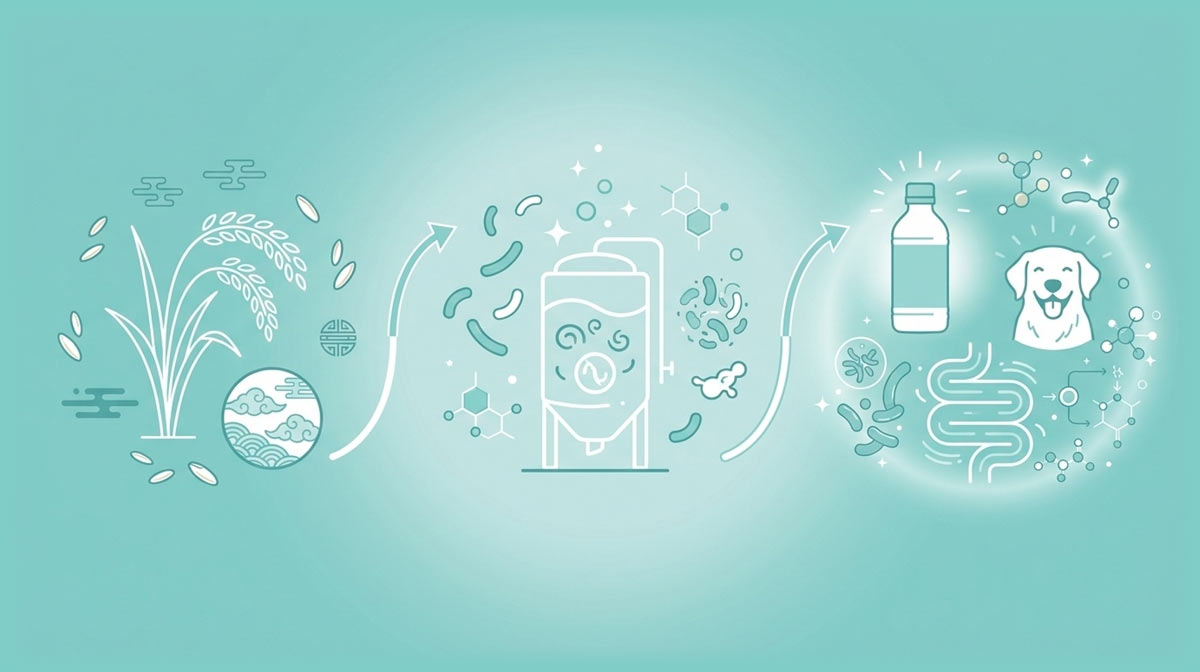
Science of fermentation
| Pillar | Function | Result |
|---|---|---|
| Microorganism | The “worker” that performs fermentation | Koji mold (Aspergillus oryzae) in COZY MILK |
| Substrate | The “raw material” being transformed | Rice in COZY MILK |
| Environment | The “conditions” controlling the process | Temperature (55–60°C), Time (6–8 hrs), pH |
Fermentation is a metabolic process where microorganisms (bacteria, yeasts, or molds) convert organic compounds—typically carbohydrates like sugars and starches—into simpler compounds, producing energy and creating new substances.
Simple Formula:
Complex Nutrients (hard to digest)
+ Microorganisms (bacteria, yeast, mold)
+ Controlled Environment (temperature, time, oxygen)
↓
Simpler Compounds (easy to absorb)
+ Beneficial Byproducts (vitamins, acids, enzymes)
+ Enhanced Nutrition
Fermentation Revolution
| Preservation | Extends food shelf life (before refrigeration) |
|---|---|
| Nutrition | Enhances bioavailability of nutrients |
| Digestion | Pre-digests complex molecules |
| Safety | Creates acidic environment that inhibits pathogens |
| Flavor | Develops unique taste profiles |
What Happens During Fermentation?
1. Molecules Examples:
• Starch → Oligosaccharides → Glucose
• Protein → Peptides → Amino Acids
• Fats → Fatty Acids + Glycerol
2. METABOLISM (Energy Production)
Microorganisms consume simple sugars
↓
Produce energy (ATP) for growth
↓
Release metabolic byproducts:
• Organic acids (lactic, acetic, citric)
• Gases (CO₂ in beer/bread, minimal in amazake)
• Alcohols (ethanol in wine/beer, trace in amazake)
• Heat
3. BIOSYNTHESIS (Creating New Compounds)
Microorganisms synthesize:
• Vitamins (especially B-complex)
• Enzymes (digestive aids)
• Antimicrobial compounds (bacteriocins)
• Aromatic compounds (flavor, aroma)
• Structural components (cell walls → β-glucan)
The Unique Power of
Koji Enzymes
The Japanese Innovation: While other cultures fermented with bacteria or yeast, Japan mastered mold fermentation over 1,700 years ago.
The Three Enzyme Superstars
Function: Starch → SugarsPower
Level: ★★★★★
What it does:
- α-Amylase: Randomly cuts starch chains → dextrins
- β-Amylase: Cuts from ends → maltose
- Glucoamylase: Produces pure glucose
Result in COZY MILK:
- Natural sweetness (no added sugar)
- Oligosaccharides (prebiotics)
- Glucose (instant energy)
Function: Protein → Amino Acids
Power Level: ★★★★☆
What it does:
- Cuts protein chains at specific points
- Releases all 20 amino acids
- Creates peptides with biological activity
Result in COZY MILK:
- Free amino acids (no digestion needed)
- Umami flavor (glutamic acid)
- Bioactive peptides
Phytase: Releases minerals from phytic acid
Lipase: Breaks down fats Cellulase: Digests fiber
Pectinase: Softens plant material
Result in COZY MILK:
- Enhanced mineral bioavailability
- Better nutrient absorption
- Easier digestion
Safety Profile
- Wild Aspergillus species produce aflatoxins (toxic)
- A. oryzae has been domesticated for 1,700+ years
- Lost ability to produce toxins through selective breeding
- Recognized as GRAS (Generally Recognized As Safe) by FDA
- Doesn’t infect humans or animals
- Doesn’t survive in body temperature (37°C)
- No allergenic properties (when properly processed)
- Consumed daily by millions in Japan
- Core ingredient in traditional Japanese diet
- Zero recorded toxicity incidents
The Fukumitsuya Difference 400 Years of Koji Mastery
-
Spore Selection (種麹 – Tane-koji)
- Proprietary strain maintained for generations
- Selected for enzyme profile
- Optimized for amazake production
-
Temperature Control (品温管理)
- Manual monitoring every 2-3 hours
- Precise adjustments based on grain appearance
- “Reading” the koji by sight, smell, touch
-
Mixing Technique (切り返し – Kirikaeshi)
- Specific hand movements to aerate
- Redistributes heat evenly
- Prevents hot spots and uneven growth
-
Water Quality (百年水 – Hyakunen-sui)
- Ancient underground aquifer water
- Mineral composition affects koji growth
- Soft water ideal for enzyme activity
-
Rice Selection
- Contract-grown premium rice
- Specific polishing ratio
- Optimal starch/protein balance
What are Postbiotics?
Postbiotics are beneficial compounds created during fermentation that remain effective even after the microorganisms are no longer alive.
Heat-Treated Fermentation Product = Inanimate microorganisms + Their beneficial components = POSTBIOTIC
WHY POSTBIOTICS ARE BETTER
- Needs refrigeration
- Dies during shipping
- 90% killed by stomach acid
- Inconsistent results
- Room temperature stable
- Stable during shipping
- 100% reaches gut
- Consistent results
How Postbiotics Work

1. Gut Protection
Organic Acids
↓
Lower pH (6.5 → 5.0)
↓
Harmful bacteria can’t grow Good bacteria thrive

2. Immune Support
β-Glucan
↓
Activate immune cells (macrophages, NK cells)
↓
Better infection defense Balanced immune response

3. Microbiome Enhancement
Oligosaccharides (prebiotics)
↓
Feed good bacteria
↓
Produce MORE beneficial compounds
↓
Long-term gut health
Perfect for Dogs
- No refrigeration → Easy for pet parents
- Acid-resistant → Dogs have very acidic stomachs (pH 1-2)
- Predictable → Same results for every dog
- Safe → Puppies, seniors, sensitive stomachs
- Convenient → Pour and serve, no special storage

COZY MILK
(Heat-Treated Fermentation)
- Traditional Fermentation
- 100% Plant-Based
- Natural Hydration
- 9 Essential Amino Acids
- Postbiotic Power
Postbiotic Compounds:
- Lactic acid, Acetic acid, Citric acid
- Lower gut pH → Inhibit harmful bacteria
- Enhance mineral absorption (2-3x better)
- Immune activation
- Strengthens natural defenses
- “Trains” immune system
- Energy metabolism
- Skin & coat health
- Heat-stable, fully retained
Prebiotic Compounds:
- Kojibiose, Nigerose, Maltose
- Feed beneficial gut bacteria
- Bacteria produce short-chain fatty acids
→ Anti-inflammatory effects

Science-Backed
2025 | Nature Scientific Reports
2025 | Journal of Animal Science
2025 | Preprints.org (Meta-Analysis)
→ TNF-α decreased by 23.97%
→ IL-10 anti-inflammatory increased
[ Read Study ]
2025 | University of Illinois Study
→ Enhanced fecal metabolites
→ Positive immune changes
[ Read Study ]
2024 | Veterinary Record